Water Foundation · 2 / 9
The water temperature a child's skin knows.
There is a specific kind of water for extended play.
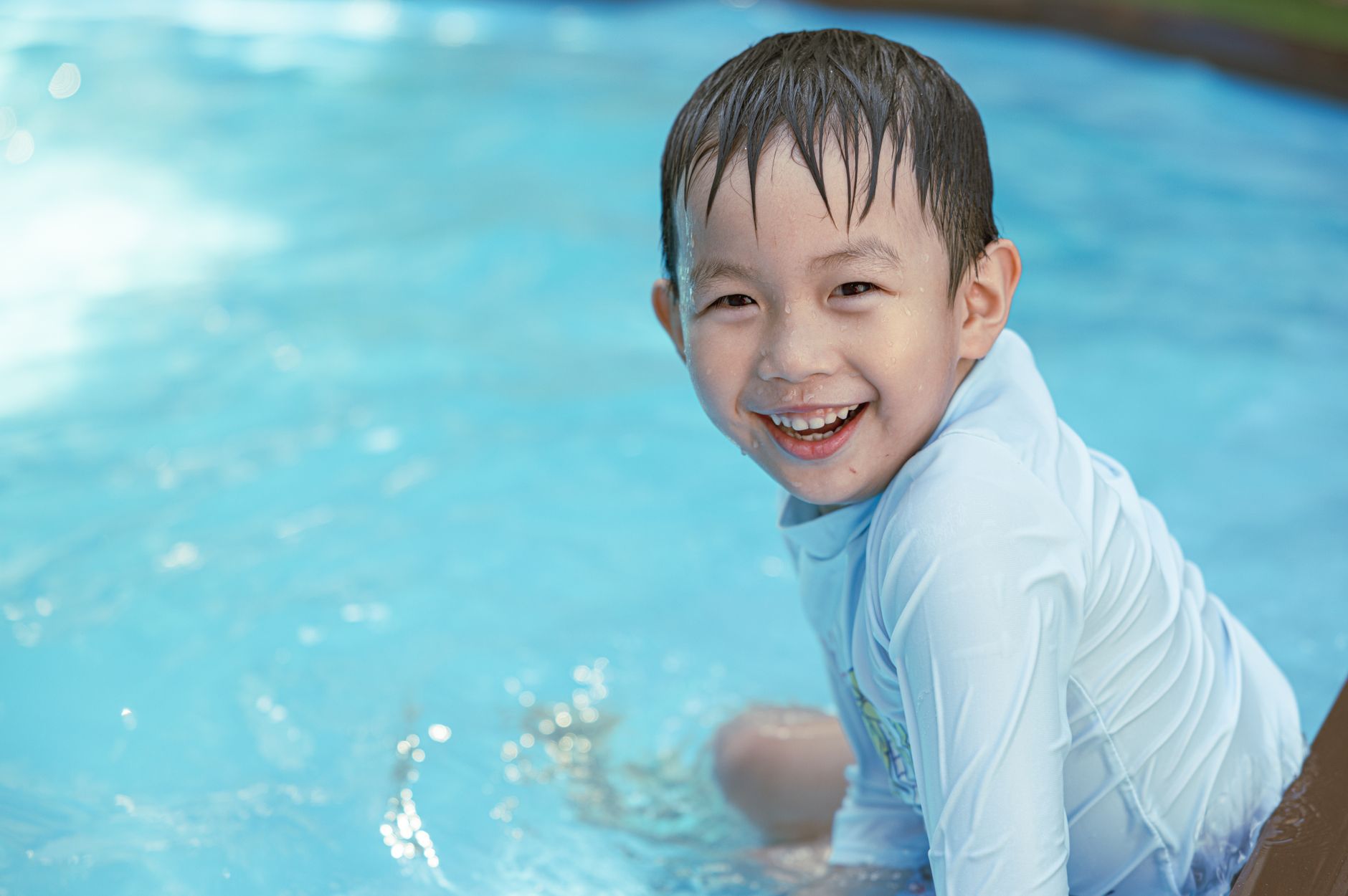
Parents who have taken their children to play in the water have probably experienced this at least once. A child, excitedly jumping in, comes out of the water with blue lips in less than thirty minutes. Even wrapped in a towel, they shiver, and even if they rest a little and go back in, they come out again quickly. In the end, parents wait for their child outside the water, and the child, in turn, feels disappointed. It's a moment when the expensive admission fee feels wasted.
The cause of all these issues is one thing: the water temperature. And while temperature is the factor that most significantly affects satisfaction with water play, it is also the most difficult information to confirm before making a reservation.
01Children get cold faster than adults
Even in the same water, children feel cold much faster than adults. This is because their smaller bodies have less capacity to store body heat, and their larger skin surface area relative to their body size causes them to lose heat quickly. Water that feels cool and refreshing to an adult might be shivering-cold water for a child.
Therefore, the standard of "it felt just right when an adult went in" is not suitable for children. If the child is the main participant in water play, the water should be adjusted to the child's body temperature. Water in which a child can play for a long time and water that an adult finds refreshing have different temperatures.
02There is a specific suitable temperature for water play
So, what temperature is ideal? A common misconception is that "the warmer, the better." However, water that is too warm in the summer is actually not suitable for water play. In water heated like bathwater, you cannot feel refreshed, and under the scorching midsummer sun, you quickly become exhausted. Conversely, if it's too cold, as mentioned earlier, children cannot stay in for long.
Ultimately, the suitable temperature lies somewhere in between. For the peak summer season, around 24 to 26 degrees Celsius is a good range for both children and adults to enjoy for a long time. It's a temperature that isn't cold yet provides a refreshing feeling under the scorching sun. And this temperature should vary slightly depending on the season and the day's air temperature. A little warmer in cool spring and autumn, a little cooler in hot midsummer. Rather than fixing it at a single temperature, adjusting it to suit the weather is ideal.
03Why most places cannot adjust the temperature
The problem lies in the difficulty of adjusting the temperature as desired. Heating water requires operating a boiler, and heating the water in a large outdoor swimming pool incurs significant fuel costs. Therefore, many outdoor water play areas use unheated water as is. This is why the water is cold in early summer or late summer when the weather is cool. Conversely, places equipped with facilities to cool water are even rarer.
Ultimately, most outdoor water play areas leave the water temperature to the day's air temperature. Except for a few days in the middle of summer, there are many days when the water is cold in the mornings and evenings, making it difficult for children to play for long. This is also why the season is shortened to just a few weeks in midsummer.
04Ask before you book
So, when choosing a water play venue, we recommend asking this question before looking at facility photos: "Do you manage the water temperature separately?" If the answer is that they adjust the temperature by heating or cooling, it means children can play for a long time regardless of the weather. If the answer is "it's natural as is," it's better to check the weather for your visiting day. This is especially true in spring, autumn, or on cloudy days.
Undam Park places particular importance on this aspect. Conveniently, this land provides an abundant supply of water warm enough not to require heating. Thanks to this, we have the flexibility to set it to a cool temperature in summer and adjust it to be a little warmer in cool spring and autumn. We will gradually explain where and how that water comes from in a subsequent story.
Water temperature is not visible. However, a child's body knows that temperature within minutes of entering the water. There is no review as honest as the expression on a child's face after playing for a long time. In the next installment, we will discuss a topic as important as temperature but even less noticeable: how often the water is changed.